Unstructured time is not wasted time
A study in the Journal of Pediatrics links the decline in children independent activity to the decline in their mental wellbeing. The figures, the proposed mechanism, and what can be done concretely.
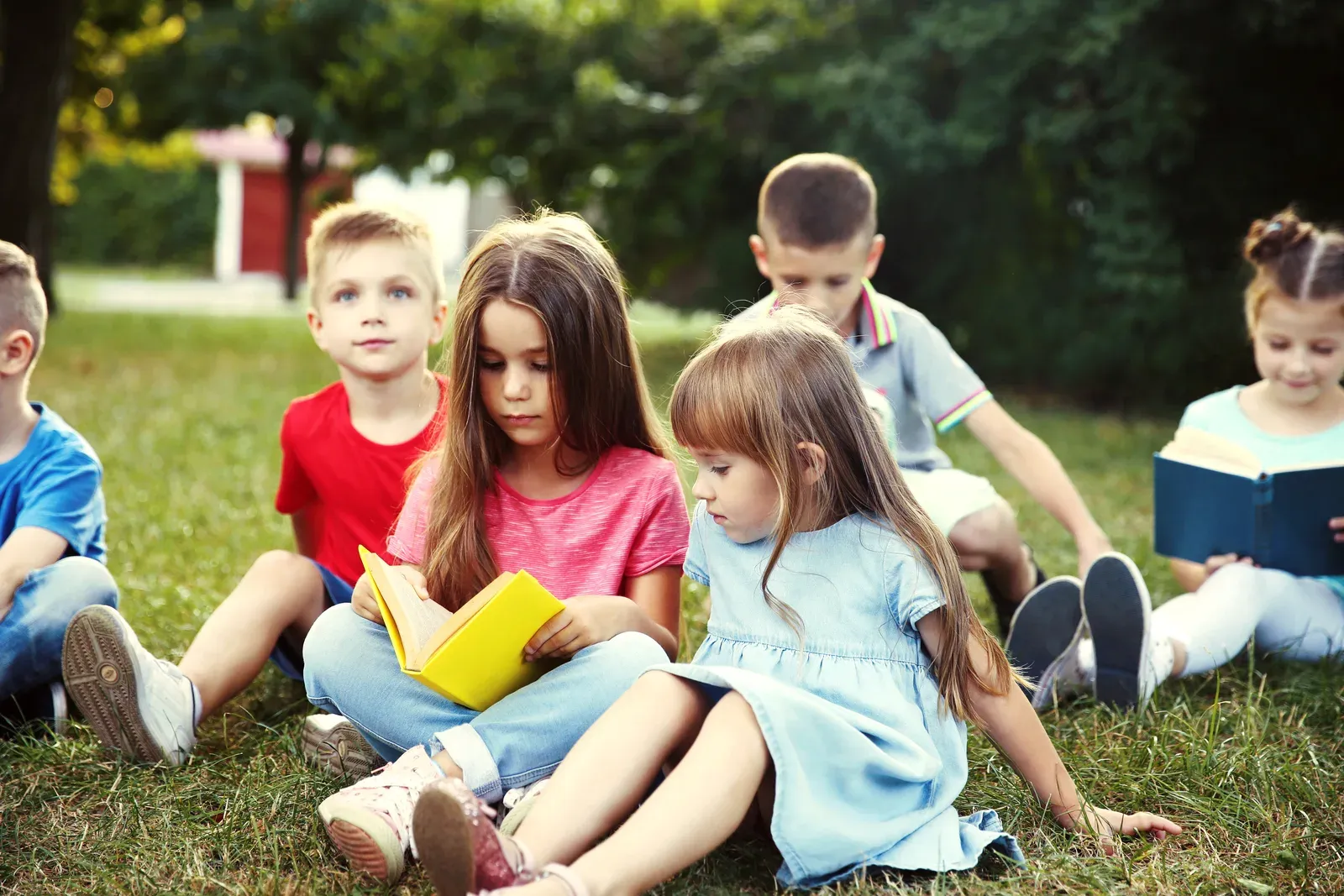
The hardest thing to sell a parent paying for an activity is the stretch in which nothing happens. I have had conversations where I was told, very directly, that he was not paying for his son to sit on a log.
I understand him. Which is exactly why the research is worth setting out, because “let them be bored” sounds like organiser’s laziness unless something stands behind it.
The study
In 2023, Peter Gray, David Lancy and David Bjorklund published in The Journal of Pediatrics a summary of the evidence with a title that leaves little room for interpretation: the decline in independent activity as a cause of the decline in children’s mental wellbeing.
Their argument, briefly: since the 1960s, free play — outdoor play especially — and children’s independence have steadily declined. Over the same decades, children’s mental health has deteriorated drastically. The authors argue this is no coincidence, and that the principal culprit is not some external crisis but adults’ own care.
Some of the figures they use, from the American context:
- Between 1950 and 2010, the average length of the school year grew by five weeks.
- By 2014, elementary school recess averaged just 26.9 minutes a day, and some schools had none at all.
- In 2021, child and adolescent mental health was declared a national emergency.
The formulation of theirs I keep returning to: adults’ drive to guide and protect children has deprived them of the independence they need for mental health.
Why it would work that way
The proposed mechanism comes from self-determination theory. Play meets the psychological need for autonomy — the need to be the cause of one’s own actions. A child who decides alone, gets it wrong alone and repairs it alone builds what psychology calls an internal locus of control: the conviction that what happens to them depends partly on them.
You cannot teach that. You can only refrain from taking it away.
The authors note something else that sounds counterintuitive: risky play, such as climbing high into a tree, helps protect children from developing phobias. The child who got frightened and climbed down unaided has done, without knowing it, exactly what exposure therapy does.
What it means in practice
The study’s recommendation is that paediatricians talk with parents about their children’s opportunities for independent activity. That is a recommendation for the consulting room. Here is what it means for a school yard or an afternoon.
A stretch with no proposal. Not “free time until I come back with the next activity”, but a declared interval, with a beginning and an end, in which the adult proposes nothing. Twenty minutes is enough to get past the “I’m bored” phase.
Boredom is the first stage, not the failure. The first five minutes of an unstructured stretch look bad. Children complain, wander, ask for a phone. If the adult gives in there, they never reach the part where the child’s own play appears. I have written about that threshold in the piece on forest school as well.
The adult stays present but not available. The distinction matters. This is not abandonment: I am there, I see everything, I step in if someone is in danger or being excluded. But I am not a source of ideas.
It is measured in repetitions, not sessions. A single free interval produces nothing visible. The fourth, in the same place, produces a construction started the time before.
What the study does not support
It does not support the claim that any structured programme is harmful. It does not say supervision is a mistake. And it is a summary of evidence, not an experiment: it links two long-term trends and proposes a mechanism, which is not the same as demonstrating a cause.
It is also worth saying that the figures cited are American. The Romanian context — school yards, roads, the habit of letting a child outside alone — is different and, as far as I know, far less documented.
For parents who ask me what this looks like at a party or a workshop: it means the programme I send has a block with no title in it. That is not an oversight.
Sources
- Gray P, Lancy DF, Bjorklund DF — Decline in Independent Activity as a Cause of Decline in Children’s Mental Wellbeing: Summary of the Evidence, The Journal of Pediatrics, 2023